
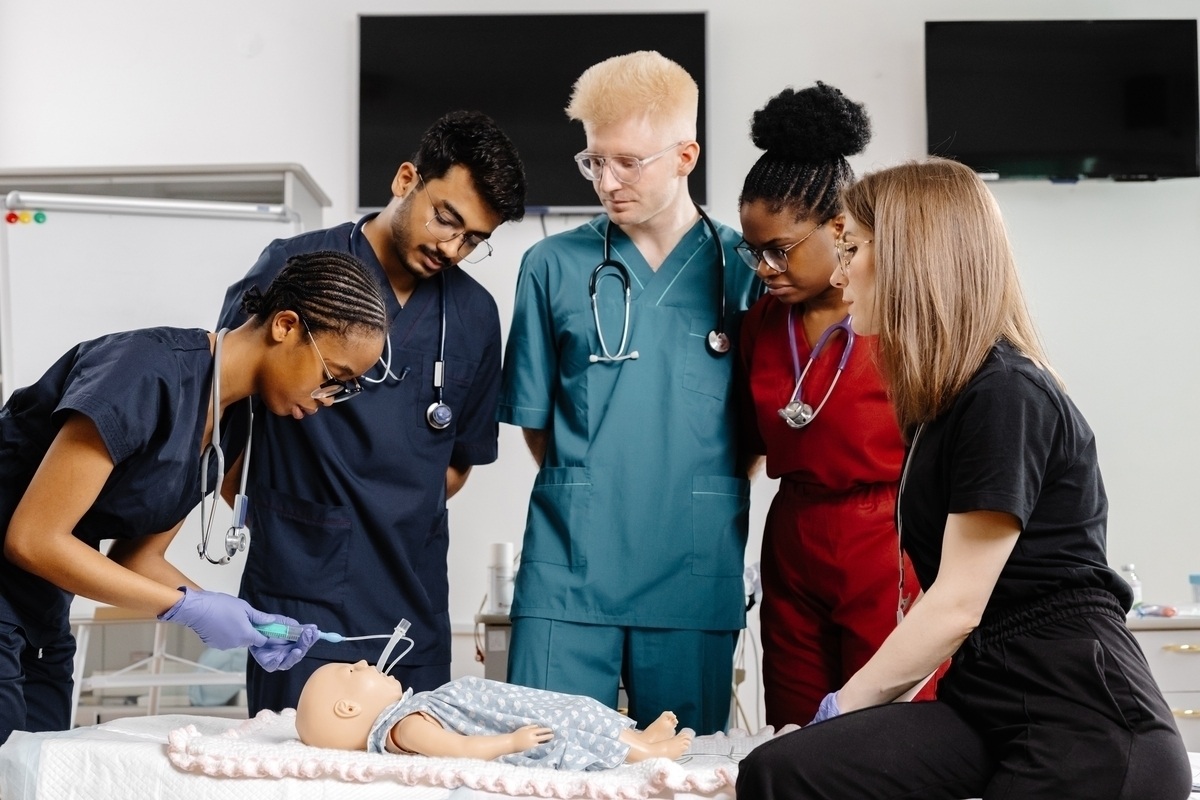
Is CNA Training Hard If You Have No Experience?
Is CNA Training Hard If You Have No Experience?
- June 28, 2026
- 13 min read
Table of Contents
- 1. Why This Question Matters Before You Commit
- 2. What Does CNA Training in New York Actually Involve?
- 3. Is the Classroom Portion Hard?
- 4. Is the Clinical Rotation Hard?
- 5. What Do Most Students Find Challenging?
- 6. What Helps Students Succeed Without Prior Experience?
- 7. How Does the Certification Exam Work in New York?
- 8. Frequently Asked Questions
- 9. What the Difficulty Question Is Really Asking
If you are thinking about enrolling in a CNA program but have no healthcare background, one of the first things you are probably asking yourself is whether the training is actually manageable. CNA training in New York is structured to take students from zero experience to certification-ready competency, but that does not mean it is without challenge. This guide gives you an honest picture of what to expect, what most students find difficult, and what tends to make the difference between those who complete the program successfully and those who struggle.
1. Why This Question Matters Before You Commit
Starting a healthcare training program without any prior medical experience can feel like stepping into unfamiliar territory. The terminology is new, the clinical environment is different from anything most people have experienced, and the emotional demands of working with patients require adjustment regardless of how prepared you feel going in.
Asking whether CNA training in New York is hard before you enroll is not a sign of hesitation. It is a sign that you are approaching the decision seriously. Understanding what the program actually involves, where students typically struggle, and what support structures exist helps you make a realistic assessment of your own readiness rather than relying on assumptions.
According to the U.S. Bureau of Labor Statistics, nursing assistants provide basic care and help patients with activities of daily living, working under the supervision of licensed nurses in nursing homes, hospitals, and other healthcare settings. The training that prepares you for this role is designed to be demanding enough to produce competent caregivers while remaining accessible to people entering healthcare for the first time.
2. What Does CNA Training in New York Actually Involve?
Before assessing difficulty, it helps to understand what CNA training in New York requires in terms of time, content, and structure. New York State has specific training standards that all approved programs must meet before students can sit for the certification exam.
According to the New York State Education Department, CNA programs in New York must include both classroom instruction and supervised clinical experience. The combined training requirement is a minimum of 100 hours, with at least 30 of those hours completed as supervised clinical practice in a long-term care setting.
The curriculum covers:
- Basic nursing skills. Patient hygiene, grooming, feeding assistance, mobility support, and vital signs measurement form the core of the clinical skills portion of the program.
- Anatomy and physiology fundamentals. Students learn how the body’s major systems work and how common conditions affect patient care needs.
- Medical terminology. Understanding the language used in healthcare settings is a foundational component that runs throughout the classroom portion of the program.
- Infection control and safety protocols. Proper hand hygiene, personal protective equipment, and patient safety procedures are covered in detail and reinforced throughout clinical training.
- Patient rights and communication. CNAs interact directly with patients and families throughout every shift. Understanding patient rights, professional communication standards, and cultural sensitivity is a core part of the curriculum.
- Documentation and reporting. Students learn how to accurately record observations and communicate changes in patient condition to the supervising nurse.
According to CNA Classes, New York requires a minimum of 100 training hours, which is higher than the federal minimum of 75 hours. Some programs offer 120 or even 160 hours of training, with extended clinical rotations that provide deeper preparation for the pace of real patient care environments.
3. Is the Classroom Portion Hard?
For most students with no prior healthcare experience, the classroom portion of CNA training in New York is manageable with consistent effort. The material is foundational rather than advanced, and programs are designed to build knowledge progressively from basic concepts toward more specific clinical applications.
The areas students most commonly find challenging in the classroom include:
- Medical terminology. Healthcare uses a specialized vocabulary that takes time to absorb. Terms for body systems, conditions, and procedures are introduced quickly, and keeping up requires regular review outside of class hours.
- Anatomy and physiology. Understanding how the body works at a systems level is new for most students without a science background. The depth required for CNA certification is introductory, but it still requires focused study.
- Documentation standards. Accurate record-keeping using specific formats and terminology requires attention to detail and practice to develop consistently.
What helps most in the classroom is showing up prepared, taking notes actively, and reviewing material between sessions rather than relying on cramming before assessments. Students who treat the classroom portion seriously are significantly better prepared when the clinical rotation begins.
4. Is the Clinical Rotation Hard?
The clinical rotation is consistently identified by graduates as the most demanding part of CNA training in New York. This is the component where classroom knowledge meets real patient care, and the adjustment can be significant for students who have never worked in a healthcare setting.
During the clinical rotation, students practice skills on actual patients under the direct supervision of a licensed nurse. The environment is faster-paced than the classroom, expectations are higher, and the emotional weight of working with patients who are elderly, ill, or recovering from injury adds a dimension that no amount of classroom preparation fully replicates.
Common challenges during the clinical rotation include:
- Adjusting to the physical demands. Long periods of standing, bending, and assisting with patient transfers require physical stamina that takes time to build.
- Managing time across multiple patients. Completing assigned tasks for several patients within a shift requires prioritization and efficiency that develops through practice rather than instruction.
- Handling emotional situations. Working with patients who are in pain, confused, or distressed requires composure and empathy that students develop differently depending on their temperament and prior life experience.
- Performing skills under observation. Knowing a skill in the classroom and executing it correctly while being evaluated by a supervising nurse are two different experiences. The pressure of observed performance causes difficulty for some students regardless of their preparation level.
Most students find that the clinical rotation becomes significantly more comfortable after the first few days as routines become familiar and confidence builds through repetition.
5. What Do Most Students Find Challenging?
Beyond the specific components of the program, several broader challenges affect students across CNA training in New York regardless of their prior experience level.
- Balancing training with other responsibilities. Many students in CNA programs are managing work, family, or financial pressures alongside their studies. Programs typically run for several weeks at varying schedule intensities, and maintaining consistency requires planning.
- Building confidence in patient interactions. For students who have no prior experience in direct patient care, the first interactions with real patients can feel uncomfortable. This discomfort typically resolves quickly with exposure, but it is a real adjustment period for most.
- Absorbing new material quickly. Programs are designed to move at a consistent pace to meet the training hour requirements within the program timeline. Students who fall behind in one area can find it difficult to keep pace with new content while catching up on earlier material.
- Preparing for the certification exam. The Prometric exam has both a written knowledge component and a practical skills demonstration. Students who do not take exam preparation seriously during training often find the exam more difficult than necessary.
For a closer look at what the program experience is like for students entering without any healthcare background, visit the Can You Become a Certified Nurse Assistant Without Healthcare Experience? blog.
6. What Helps Students Succeed Without Prior Experience?
No prior healthcare experience is required to enroll in CNA training in New York, and the majority of students who complete these programs have no clinical background at all. What distinguishes students who complete the program successfully from those who struggle tends to come down to a consistent set of behaviors and attitudes rather than prior knowledge.
Factors that consistently support student success include:
- Attending every session. CNA programs build progressively. Missing classroom or clinical hours creates gaps that are difficult to recover from, both in terms of content knowledge and skill development.
- Asking questions early. Students who raise concerns and ask for clarification during the classroom portion arrive at the clinical rotation with a clearer foundation than those who wait until confusion becomes a problem.
- Practicing skills outside of scheduled hours. Many students practice skill procedures at home between clinical sessions to build the muscle memory needed for consistent execution under observation.
- Staying organized with study materials. Medical terminology and anatomy content require ongoing review. Students who organize their notes and revisit material regularly retain it more effectively than those who study only before assessments.
- Approaching the clinical rotation with openness. Students who enter the clinical component willing to learn from supervisors, accept correction, and engage genuinely with patients adapt to the environment more quickly than those who approach it with apprehension or defensiveness.
7. How Does the Certification Exam Work in New York?
Completing the program is only part of the process. To become a certified nurse aide in New York, students must pass the state competency exam administered by Prometric on behalf of the New York State Department of Health.
The exam has two components:
- Written knowledge test. A multiple choice exam covering the theoretical content of the CNA curriculum. Students have a set time limit to complete the exam, and an oral version is available for students who have difficulty reading English.
- Clinical skills evaluation. Students are observed performing five randomly selected patient care skills in front of a nurse aide evaluator. Each skill must be executed correctly and safely within the time allowed.
Both components must be passed within 24 months of completing the training program. Students who do not pass within that window may be required to repeat training before attempting the exam again.
The practical skills portion is where most students feel the greatest pressure. Practicing each skill thoroughly during the clinical rotation and during any available review time before the exam date is the most effective preparation strategy.
For location-specific enrollment and program details in Staten Island, visit the CNA Training in Staten Island NY page.
8. Frequently Asked Questions
No. Most programs are designed for students with no prior clinical or administrative healthcare experience. The curriculum starts with foundational concepts and builds progressively through classroom instruction and supervised clinical practice.
Most programs can be completed in four to twelve weeks depending on schedule format and program intensity. New York requires a minimum of 100 training hours, with at least 30 of those hours completed as supervised clinical practice.
The exam requires preparation, but students who engage consistently with both the classroom and clinical components of their program are generally well positioned to pass both the written and practical portions. The practical skills evaluation is the component most students find the most pressure-intensive.
Students have multiple opportunities to retake each component of the exam within the 24-month window following program completion. If both components are not passed within that period, retraining may be required before reattempting the exam.
This depends on the program format and schedule. Some programs offer evening or weekend options that allow students to maintain employment during training. Reviewing the schedule options available at your chosen program before enrolling helps you plan accordingly.
Yes. All clinical practice in New York State approved CNA programs is conducted under the direct supervision of a licensed practical nurse or registered nurse. Students do not practice patient care skills independently during training.
9. What the Difficulty Question Is Really Asking
When people ask whether CNA training in New York is hard, they are usually asking something more specific. They want to know whether they are capable of completing it, whether the material will be too advanced for someone without a background in healthcare, and whether the experience of working directly with patients will be something they can handle.
The honest answer is that CNA training in New York is structured to be demanding without being inaccessible. The classroom content is introductory rather than advanced. The clinical skills are teachable with practice and repetition. The certification exam is passable with consistent preparation. What makes the program feel hard for some students is not the complexity of the material but the combination of new content, a new environment, and real patient care responsibilities happening simultaneously for the first time.
Students who approach the program with realistic expectations, consistent attendance, and a genuine willingness to engage with both the academic and clinical components are the ones who complete it successfully, regardless of whether they had any healthcare experience when they started. For more information about the Certified Nurse Assistant program and what enrollment involves, visit the Certified Nurse Assistant Classes page.
Key Takeaways
CNA training in New York is designed to build competency from the ground up, making it accessible to students with no prior healthcare experience. The classroom portion covers foundational knowledge that is manageable with consistent study, while the clinical rotation presents a steeper adjustment for most students due to the pace, physical demands, and emotional weight of real patient care.
What determines success in the program is less about prior knowledge and more about consistent attendance, active engagement with the material, and a willingness to learn through the challenges that come with entering a new professional environment for the first time.
Is the Training What You Expected?
Most people who complete CNA training in New York say the experience was more manageable than they anticipated going in. The program is structured, the skills are learnable, and the clinical component, while demanding, is the part of the training that prepares you most directly for the realities of the job.
Disclaimer: The information provided in this article is for general educational purposes only and is not intended as professional or official guidance. Program requirements, tuition costs, schedule availability, and enrollment eligibility may vary and are subject to change without notice. Readers are encouraged to contact the school directly to verify current program details before making any decisions. Individual experiences and outcomes may differ.