
What Does a Medical Assistant Do on a Typical Day in NYC?
What Does a Medical Assistant Do on a Typical Day in NYC?
- July 12, 2026
- 8 min read
Table of Contents
- 1. Why the Day-to-Day Reality Matters Before You Commit
- 2. Understanding the Medical Assistant Role in NYC
- 3. How a Typical Morning Shift Begins
- 4. What Happens During the Middle of the Workday
- 5. How the Shift Wraps Up
- 6. How the Work Varies by Setting
- 7. What the Role Demands Beyond Clinical Tasks
- 8. Frequently Asked Questions
- 9. Seeing the Full Picture Before You Decide
If you are weighing a career in healthcare, one of the most useful things you can do before enrolling in any program is get a clear picture of what the job actually looks like on an ordinary workday. The medical assistant role in NYC spans a wide range of responsibilities across different healthcare settings, and the daily experience can vary considerably depending on the type of facility, the patient population, and how the practice is organized. This guide walks through what a typical shift looks like from start to finish, what kinds of tasks come up throughout the day, and what the work genuinely demands from the people doing it.
1. Why the Day-to-Day Reality Matters Before You Commit
Many people researching healthcare careers focus heavily on training timelines, certification requirements, and employment figures. Those things matter, but they tell you very little about what you will actually spend your time doing once you are on the job.
Knowing what the medical assistant role in NYC looks like in practice helps you evaluate whether the work aligns with your interests, your temperament, and the kind of professional environment you want to be part of. It also gives you a more accurate reference point for what training is preparing you to do, which makes the classroom and clinical components of any program more meaningful from the very first session.
According to the U.S. Bureau of Labor Statistics, medical assistants perform both administrative and clinical tasks, supporting physicians and other healthcare providers in outpatient settings. Employment in the field is projected to grow 12 percent between 2024 and 2034, adding roughly 112,300 new positions annually across the country.
For a broader overview of the skills that define this role, visit the What Does a Medical Assistant Do? Duties, Skills, and Work Environment blog.
2. Understanding the Medical Assistant Role in NYC
New York City operates one of the most extensive and active healthcare systems in the United States. Hospitals, specialty practices, urgent care centers, federally qualified health centers, and private physician offices are spread across all five boroughs, and each of those settings draws on medical assistants to keep daily operations running.
The medical assistant role in NYC reflects the dual nature of the position. Medical assistants are not purely clinical workers, and they are not purely administrative workers. They move between both functions throughout the day, which is part of what makes the role both demanding and varied.
According to the New York State Education Department, medical assistants in New York perform administrative tasks such as updating patient records, handling billing documentation, and scheduling appointments, as well as clinical tasks including obtaining medical histories, taking vital signs, collecting laboratory specimens, and preparing patients for examinations. New York State also defines specific tasks that medical assistants are not permitted to perform, including administering medications, placing wound closures, or inserting and removing IVs.
Understanding both sides of the role, what is included and what falls outside the scope of practice, is foundational to doing the job correctly and safely in any New York healthcare setting.
3. How a Typical Morning Shift Begins
The start of a shift in any healthcare setting involves a structured transition from the previous day or the overnight period. For medical assistants working in outpatient clinics and physician offices, which represent the most common employment setting in New York City, the morning typically begins before patients arrive.
Common morning tasks include:
- Reviewing the day’s patient schedule. Checking which patients are coming in, what their visits are for, and whether any specific preparation or equipment setup is required before they arrive.
- Setting up examination rooms. Verifying that each room is stocked with the necessary supplies, that equipment is functioning correctly, and that the space is clean and organized for the first patient of the day.
- Pulling and reviewing patient charts. Checking electronic health records for upcoming patients to familiarize the clinical team with relevant history, active medications, allergies, and any outstanding orders.
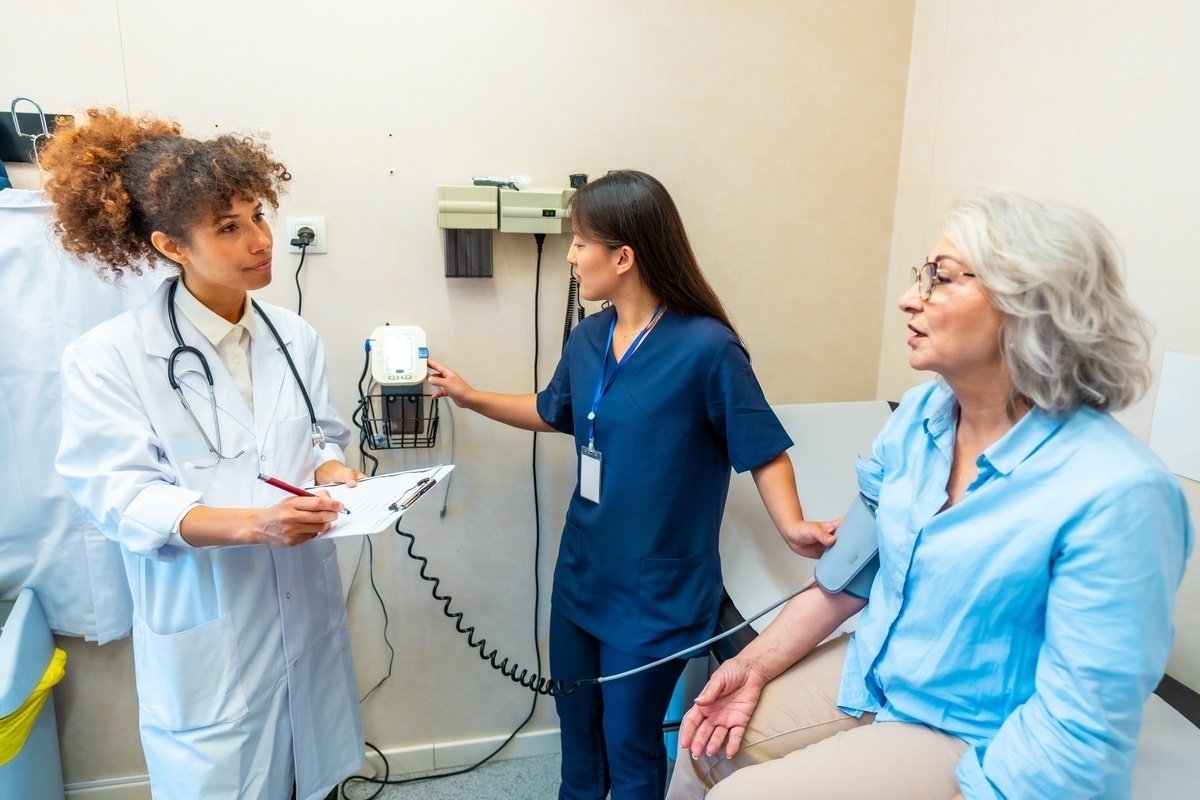
- Conducting patient intake. Greeting patients as they arrive, escorting them to exam rooms, recording chief complaints, taking vital signs including blood pressure, heart rate, temperature, and respiratory rate, and documenting the information accurately in the EHR before the provider enters the room.
- Specimen and lab preparation. In practices that conduct in-house lab work, preparing equipment for blood draws or specimen collection that will take place during morning appointments.
The morning period in most outpatient settings is the most structured part of the day. Appointments are scheduled at defined intervals, and the medical assistant’s role is to keep each patient moving through intake efficiently so the provider’s time is used effectively.
4. What Happens During the Middle of the Workday
The midday portion of a shift in a medical office or clinic tends to involve a mix of patient care, administrative follow-up, and coordination tasks. Depending on the pace of the practice and the volume of patients scheduled, this portion of the day can be fast-moving and requires strong organizational habits.
Typical midday responsibilities include:
- Assisting during patient examinations and procedures. Staying available to support the provider during visits, which may involve handing instruments, preparing equipment for minor in-office procedures, positioning patients, or providing instructions before and after an examination.
- Conducting phlebotomy and specimen collection. Drawing blood for laboratory testing using correct venipuncture technique, labeling specimens accurately, and managing chain-of-custody documentation for lab submission.
- Performing EKG procedures. Preparing patients for electrocardiograms, applying leads in the correct positions, operating the EKG machine, and ensuring the tracing is of diagnostic quality before it is reviewed by the provider.
- Processing insurance and referral documentation. Verifying patient insurance coverage, submitting prior authorization requests for procedures or medications, and coordinating referrals to specialists when ordered by the physician.
- Responding to patient communications. Returning patient calls regarding test results within the permitted scope, relaying messages to providers, scheduling follow-up appointments, and addressing administrative questions that come in during the day.
- Restocking and room turnover. Cleaning and resetting examination rooms between patients, replacing used supplies, and maintaining the organization of clinical areas throughout the shift.
According to All Allied Health Schools, the medical assistant role in NYC requires strong multitasking ability because clinical and administrative tasks frequently overlap throughout the workday. Assistants who can manage competing priorities without losing accuracy in either area are consistently valued by employers across all practice types.
5. How the Shift Wraps Up
The end of a shift in a medical office involves closing out the clinical and administrative work of the day and preparing the practice for the following morning or the incoming shift. This portion of the day is often underestimated in terms of the attention it requires.
End-of-shift tasks typically include:
- Completing documentation. Reviewing all patient records entered during the day to confirm accuracy, adding any missing information, and ensuring that every encounter is fully documented before sign-off.
- Processing end-of-day lab and test orders. Following up on any outstanding specimen submissions, test orders, or result notifications that came in during the day and require same-day action.
- Preparing for the following day. Pulling charts for the next day’s scheduled patients, confirming appointment details, and flagging any preparation tasks that need to be completed before the first patient arrives.
- Cleaning and securing the clinical area. Conducting a final check of all examination rooms, disposing of any waste according to protocol, securing medications and sharps, and confirming that the space is ready for the next clinical session.
- Shift handoff communication. In practices with overlapping shifts or after-hours coverage, communicating any unresolved patient issues, pending results, or outstanding tasks to the incoming staff clearly and completely.
For students considering this career path, the Medical Assistant Classes page provides a detailed overview of the curriculum that prepares graduates for all three phases of a clinical workday.
6. How the Work Varies by Setting
The medical assistant role in NYC does not look the same in every workplace. The type of facility has a significant effect on the pace of the work, the mix of clinical and administrative tasks, and the patient population a medical assistant interacts with daily.
- Private physician offices. These tend to offer the most predictable schedule, with a defined patient volume and consistent hours. Medical assistants in smaller practices often develop close working relationships with the clinical team and take on a broader range of responsibilities because staffing is leaner.
- Urgent care centers. These settings operate at a faster pace and see a higher volume of walk-in patients with acute complaints. Medical assistants in urgent care must be comfortable with rapid intake, unpredictable patient presentations, and shifting priorities throughout the shift.
- Hospital outpatient departments. These facilities serve larger and more complex patient populations than private offices. Medical assistants in hospital outpatient settings often work alongside larger clinical teams and may have more narrowly defined responsibilities within a specialized department.
- Community health centers. These serve high-need populations throughout Brooklyn, Queens, the Bronx, Manhattan, and Staten Island. Medical assistants in these settings frequently work with patients who speak languages other than English and may require additional support navigating the healthcare system.
- Specialty practices. Cardiology, dermatology, orthopedics, and other specialty offices each involve procedure-specific skills and equipment. Medical assistants who work in specialty settings often develop clinical expertise in a particular area over time.
7. What the Role Demands Beyond Clinical Tasks
A clear understanding of the medical assistant role in NYC includes recognizing that technical skills are only part of what the position requires. The non-technical dimensions of the work are just as consequential to performance and patient experience.
- Communication across multiple audiences. Medical assistants interact with patients, family members, physicians, nurses, billing staff, and external providers throughout a single shift. The ability to communicate accurately and professionally with each of those groups is foundational to the role.
- Emotional steadiness in a patient-facing environment. Patients in clinical settings are frequently anxious, in pain, or dealing with difficult diagnoses. Medical assistants who can remain calm and maintain a professional, reassuring manner contribute directly to the quality of the patient experience.
- Precision in documentation. Every piece of information entered into the EHR becomes part of a patient’s permanent medical record and may influence future clinical decisions. Accuracy is not optional, and errors in documentation have real consequences for patient safety.
- Adaptability to a constantly shifting workload. Patient cancellations, walk-ins, provider delays, equipment issues, and unexpected clinical developments all affect the structure of a workday. Medical assistants who can reprioritize quickly without losing focus are consistently more effective in any practice setting.
- Awareness of scope-of-practice boundaries. Knowing clearly which tasks fall within the permitted scope for medical assistants in New York State, and which require a licensed provider, is a professional and legal responsibility that medical assistants carry every day they are on the job.
8. Frequently Asked Questions
The core responsibilities are similar across the country, but New York State has specific scope-of-practice rules that define what medical assistants are and are not permitted to do. Tasks such as administering medications, placing sutures, or inserting IVs fall outside the permitted scope in New York and must be performed by licensed providers.
Both options exist depending on the employer. Full-time positions typically involve five eight-hour shifts per week. Some practices and urgent care centers offer part-time and per diem arrangements, which can work well for students or individuals managing other commitments.
Most medical assistant positions in New York City involve both. The balance between clinical and administrative tasks varies by setting. Smaller private practices tend to have more mixed responsibilities, while larger facilities may assign medical assistants to more defined roles within specific departments.
New York City's patient population is among the most diverse in the world. Medical assistants in NYC regularly work with patients across a wide range of ages, languages, cultural backgrounds, and health conditions. Multilingual ability is a practical advantage in many settings throughout the five boroughs.
The role involves extended periods of standing and moving between exam rooms, patients, and work areas. Phlebotomy, EKG setup, and patient positioning require physical precision. The work is more physically active than a desk job but less strenuous than roles involving heavy patient lifting or transfer.
Yes. Many medical assistants develop expertise in a specific clinical area such as cardiology, dermatology, pediatrics, or oncology through experience in a specialty practice. Some pursue additional certifications in phlebotomy or EKG to formalize that specialization.
9. Seeing the Full Picture Before You Decide
The medical assistant role in NYC is one of the more dynamic entry-level positions available in the healthcare sector. No two days are identical, and the combination of direct patient contact, clinical procedure work, and administrative coordination gives the role a range that is unusual for a position that requires less than a year of formal training.
For anyone seriously considering this career, the most valuable step after understanding what the work involves is learning what formal training actually prepares you for and how that preparation translates to the first day on the job. That connection between curriculum and practice is what determines how quickly a new graduate can contribute meaningfully in a clinical setting.
To learn more about the program structure and what the Medical Assistant curriculum covers at the Brooklyn location, visit the Medical Assistant Classes in Brooklyn, NY page.
Key Takeaways
- The medical assistant role in NYC involves a consistent combination of clinical tasks such as vital signs, phlebotomy, and EKG, alongside administrative responsibilities including documentation, scheduling, and insurance coordination.
- The daily structure of the role varies significantly by setting, with private practices, urgent care centers, hospital outpatient departments, and community health centers each offering a different pace and patient mix.
- New York State defines a clear scope of practice for medical assistants that determines which tasks can and cannot be performed without a license, and adherence to those boundaries is a professional and legal obligation.
- Beyond technical skills, the role demands communication clarity, emotional composure in patient-facing situations, documentation accuracy, and the ability to adapt quickly to a workday that rarely unfolds exactly as planned.
A Career That Starts With Understanding the Work
The clearest path to a confident career decision is an honest look at what the job actually involves before committing to training. Medical assisting in New York City offers consistent demand, varied daily work, and a direct connection between what you learn in a training program and what you do on the job from day one.
Disclaimer: The information provided in this article is for general educational purposes only and is not intended as professional or official guidance. Program requirements, tuition costs, schedule availability, and enrollment eligibility may vary and are subject to change without notice. Readers are encouraged to contact the school directly to verify current program details before making any decisions. Individual experiences and outcomes may differ.
References
- U.S. Bureau of Labor Statistics. (2024). Medical Assistants: Occupational Outlook Handbook. United States Department of Labor. https://www.bls.gov/ooh/healthcare/medical-assistants.htm
- New York State Education Department. (2024). Medical Assisting. Career and Technical Education. https://www.nysed.gov/career-technical-education/medical-assisting
- All Allied Health Schools. (2026, March 17). Your Guide to Becoming a Medical Assistant in New York State. https://www.allalliedhealthschools.com/medical-assisting/new-york/